Art & Architecture
article | Reading time3 min
Art & Architecture
article | Reading time3 min
Discover a devotional theme that was particularly popular in the 17th century.
© Philippe Berthé/Centre des Monuments Nationaux.
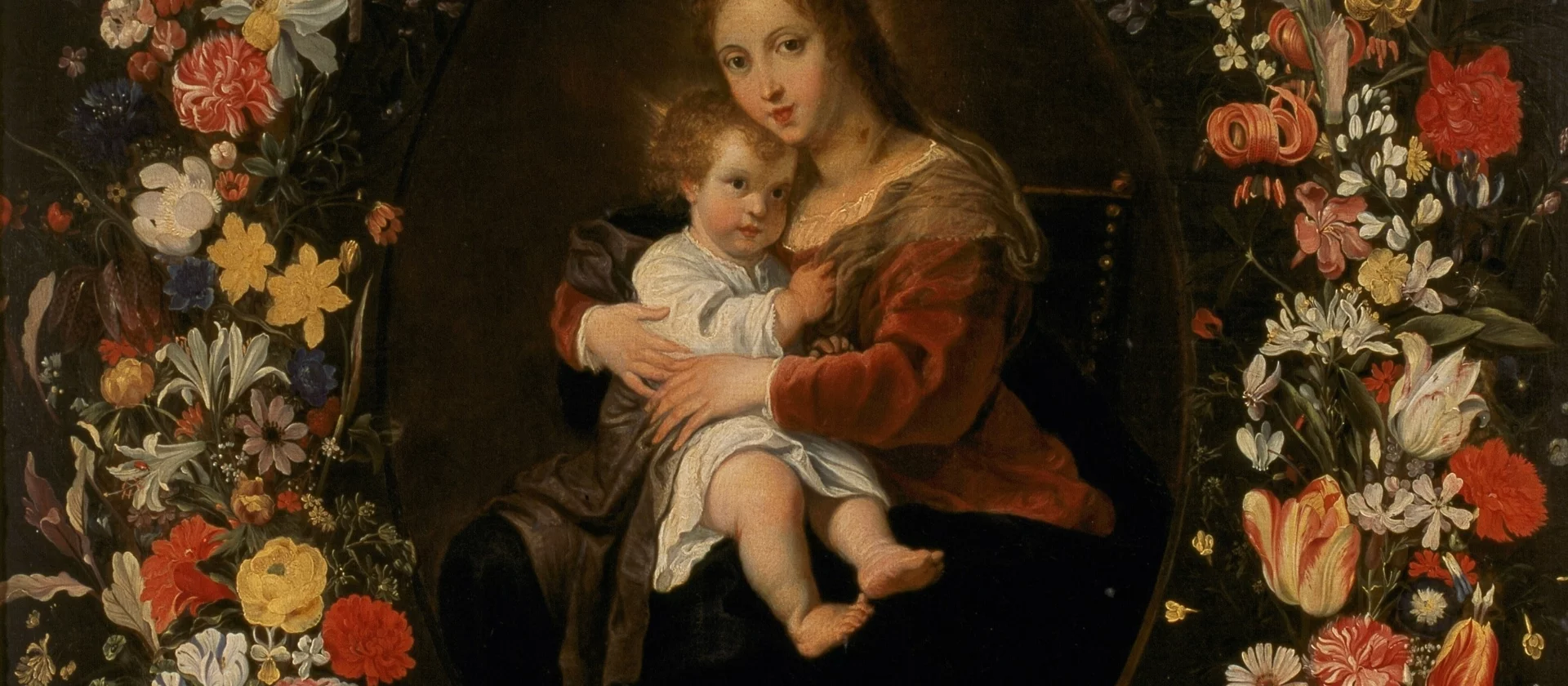
The subject depicted – Christ’s relationship with children – was particularly popular inthe 17th century, when French spirituality was dominated by a devotion to the mystery of the Incarnation, driven mainly by the Carmelite and Oratorian orders. Devotion to the Infant Jesus was then experiencing an unprecedented surge in popularity, finding a prime outlet in depictions of the Virgin and Child, the Holy Family, and also scenes of this kind. ‘Let the little children come to me’ is a theme also illustrated by the painters Adam van Noort (1562–1641) from 1600 onwards, Jacob Jordaens (1593–1678) and Antoon van Dyck (1599–1641).
Medium- and small-scale religious paintings, such as Aulteribe’s, were reserved for private devotion. The aristocracy and the bourgeoisie commissioned these devotional images, which generally adorned private spaces or oratories. Their function was devotional, far removed from large-scale decorative works.
The name of Frans Francken II has been put forward for this painting, and this attribution can be supported by a number of elements reminiscent of the master’s style: an abundance of pictorial details (a small dog, a view of the landscape…), numerous figures, shimmering drapery, etc. Nevertheless, the treatment of expressions and faces seems far removed from Francken’s style, particularly with regard to the faces with short foreheads, whereas Francken’s are very elongated, with refined details in the female faces.
We must no doubt consider another painter, a member of Francken’s circle, as the possible artist of this painting. The most plausible candidate is undoubtedly Cornelis de Baellieur, given the numerous similarities – facial forms, treatment of drapery, colour palette – between the works attributed to him and the Aulteribe painting. This Antwerp painter (1607–1671) was one of Frans II Francken’s closest collaborators. His art is heavily influenced by Francken’s, whilst distinguishing itself notably in the treatment of the faces, which is less ornate. Unfortunately overshadowed by his illustrious colleague, little is known about his life and work.
© Wikipedia
© Wikipedia
© Philippe Berthé / Centre des Monuments Nationaux
© Philippe Berthé / Centre des Monuments Nationaux
© Philippe Berthé / Centre des Monuments Nationaux
Heritage Curator