Art & Architecture
article | Reading time4 min
Art & Architecture
article | Reading time4 min
Set off to discover how the portrait of the Queen came to be widely known!
© Benjamin Gavaudo/Centre des Monuments Nationaux
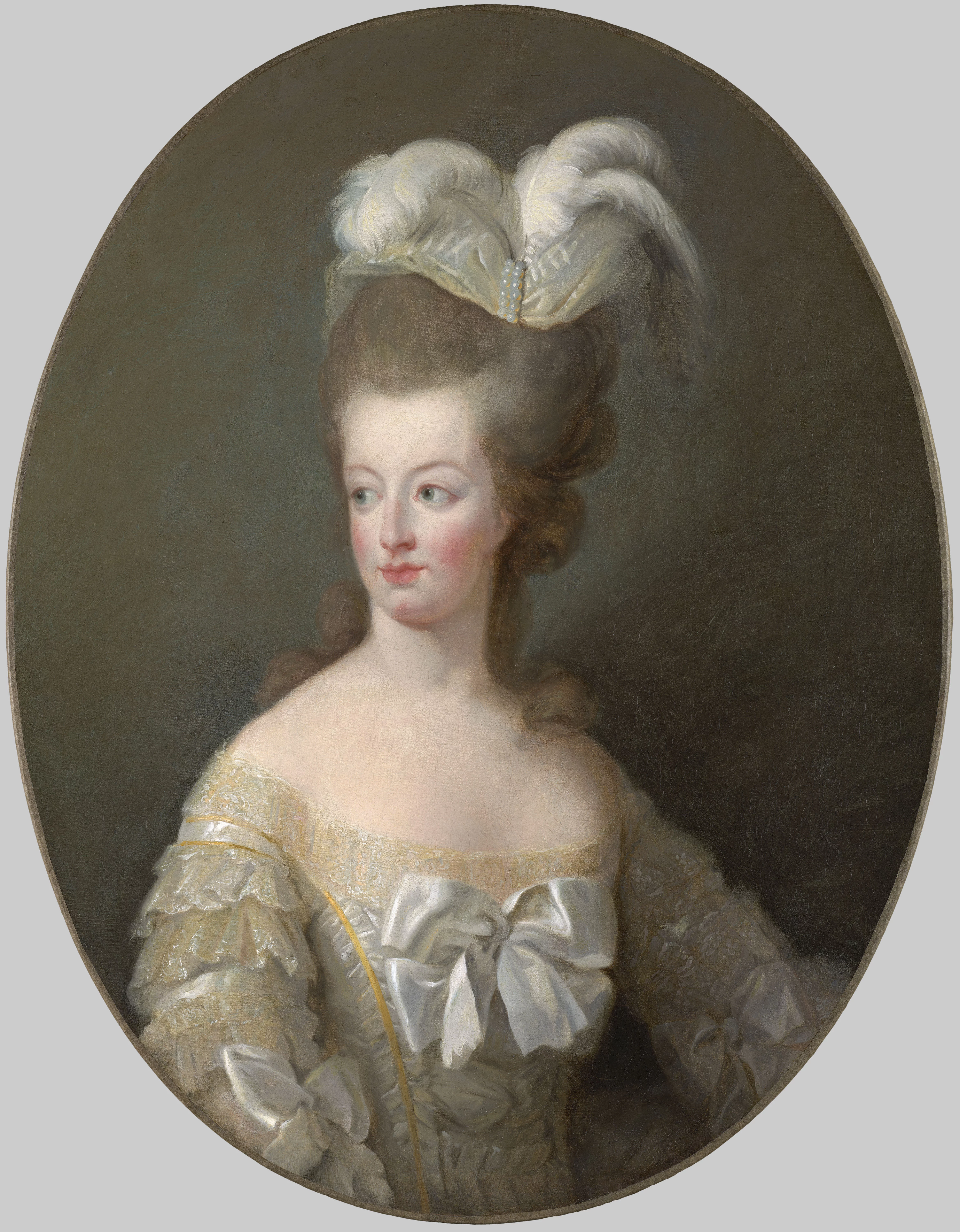
The portrait at the Château d’Aulteribe is a bust version of the large portrait from 1778, painted by Louise-Élisabeth Vigée Le Brun (1755–1842), the original of which is held in Vienna. One bust version was at Fontainebleau, whilst another – one of the four acknowledged by the artist – was in a private collection in Paris. The full-length portrait in court dress arrived in Vienna in 1779 at the home of Marie-Antoinette’s mother, Marie-Thérèse of Austria, who had wanted a portrait of her daughter ever since she became Dauphine of France. However, none of the portraits satisfied Marie-Antoinette, who was distressed that no painter had managed to capture her likeness. Finally, in 1778, the portraitist Louise-Élisabeth Vigée Le Brun met her expectations: the portrait adhered to both the conventions of the genre and bore a strong resemblance to the subject, with a very realistic purplish complexion. Vigée Le Brun recounts in her *Souvenirs* just how difficult the Queen’s features were to capture, as they were irregular, the oval of her face was very long – a characteristic of the Habsburgs – and that she had to capture the very finest details to convey the radiance of her complexion and her spirited gaze.
This version is not an autograph copy, although this might well have been the case, as the painter lists in her *Souvenirs* a whole series of copies executed in 1779: ‘- Large portrait of the Queen for the Empress of Russia -Busts of Queen Marie-Antoinette -Copies of the same (...) -Copies of busts of Queen Marie-Antoinette (...) - Portrait of the Queen for M. de Sartines (...) -Copies of the large portrait of Queen Marie-Antoinette for Mr and Mrs de Vergenne’. Aulteribe’s version is unlikely to be one of these copies, as the central egret is missing, and it is hard to imagine the painter overlooking such a detail in her copies of an early portrait of the Queen. It would appear to be more of a copy of a copy, which are, surprisingly, relatively rare on the art market. But in Aulteribe’s portrait, apart from the fact that the egret is missing, the rendering of the fabrics is far more sketchy. As for the complexion, it is rendered in a far less subtle manner than in the version at the Château de Breteuil: there is no contrast between the radiance of the skin and the pronounced redness of the cheeks and the tip of the nose.
After delivering the first major official portrait of Marie Antoinette in 1778, Madame Vigée Le Brun was regularly commissioned to capture the sovereign’s likeness. In 1783, thanks to the queen’s intervention, Madame Vigée Le Brun was admitted to the Royal Academy of Painting and Sculpture, submitting as her admission piece an allegorical painting rather than a portrait:*Peace Bringing Back Abundance*. The director of the institution, the painter Jean-Baptiste Marie Pierre, had strongly opposed the newcomer’s application. According to the institution’s rules, her husband’s profession as an art dealer was incompatible with admission to the Academy. By securing one of the five places open to female candidates, the portrait painter achieved recognition and went on to work for the courts of Europe.
Her portraits, in which she excelled at capturing the radiance and subtleties of the flesh, fetched high prices and attracted a clientele of aristocrats, thanks to whom she was able to support herself throughout her exile, having left France at the very outset of the revolutionary upheavals. She then travelled through the European capitals (Rome, Vienna, London and then St Petersburg) and painted numerous portraits of the high aristocracy. She did not return to Paris until 1800, when she was removed from the list of immigrants.
© Palace of Versailles, dist. RMN-Grand Palais / Christophe Fouin
© Kunsthistorisches Museum
© Wikipedia
© Benjamin Gavaudo/Centre des Monuments Nationaux
© Benjamin Gavaudo/Centre des Monuments Nationaux
Pierre Arizzoli-Clémentel, Xavier Salmon, Marie-Antoinette, exhibition catalogue, Galeries nationales du Grand Palais, Paris, 15 March–30 June 2008, Paris, Réunion des musées nationaux, 2008.
Heritage Curator